Mid-Think
Training-free intermediate-budget reasoning through token-level triggers that induce or suppress thinking.
From Two Modes to a Useful Middle Ground
Reasoning models are usually presented with a binary choice: use full think mode or suppress reasoning with no-think. This is a coarse interface. Full reasoning can be expensive, while direct answering can leave accuracy on the table. Mid-Think: Training-Free Intermediate-Budget Reasoning via Token-Level Triggers searches for an intermediate operating point without training a new model or imposing a fixed token cutoff.
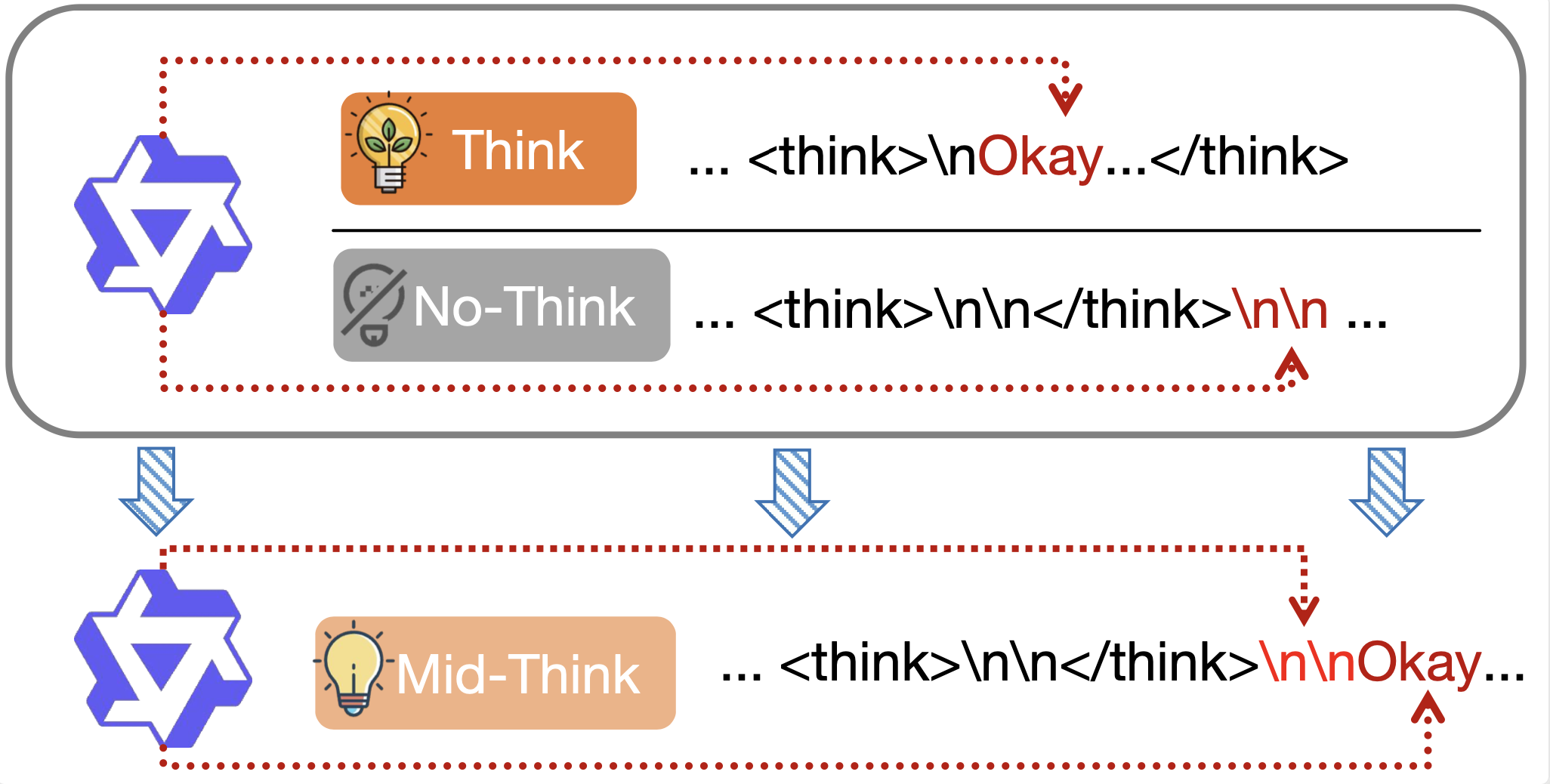
Token-Level Triggers
Attention analysis reveals that high-level instructions are not the whole story. A small number of opening tokens behave like switches: a leading “Okay” token strongly attracts attention and activates reasoning, while the newline pattern after </think> suppresses it. Controlled prompts reproduce the same behavior across reasoning settings, suggesting that the model has learned lexical triggers from highly regular training templates.
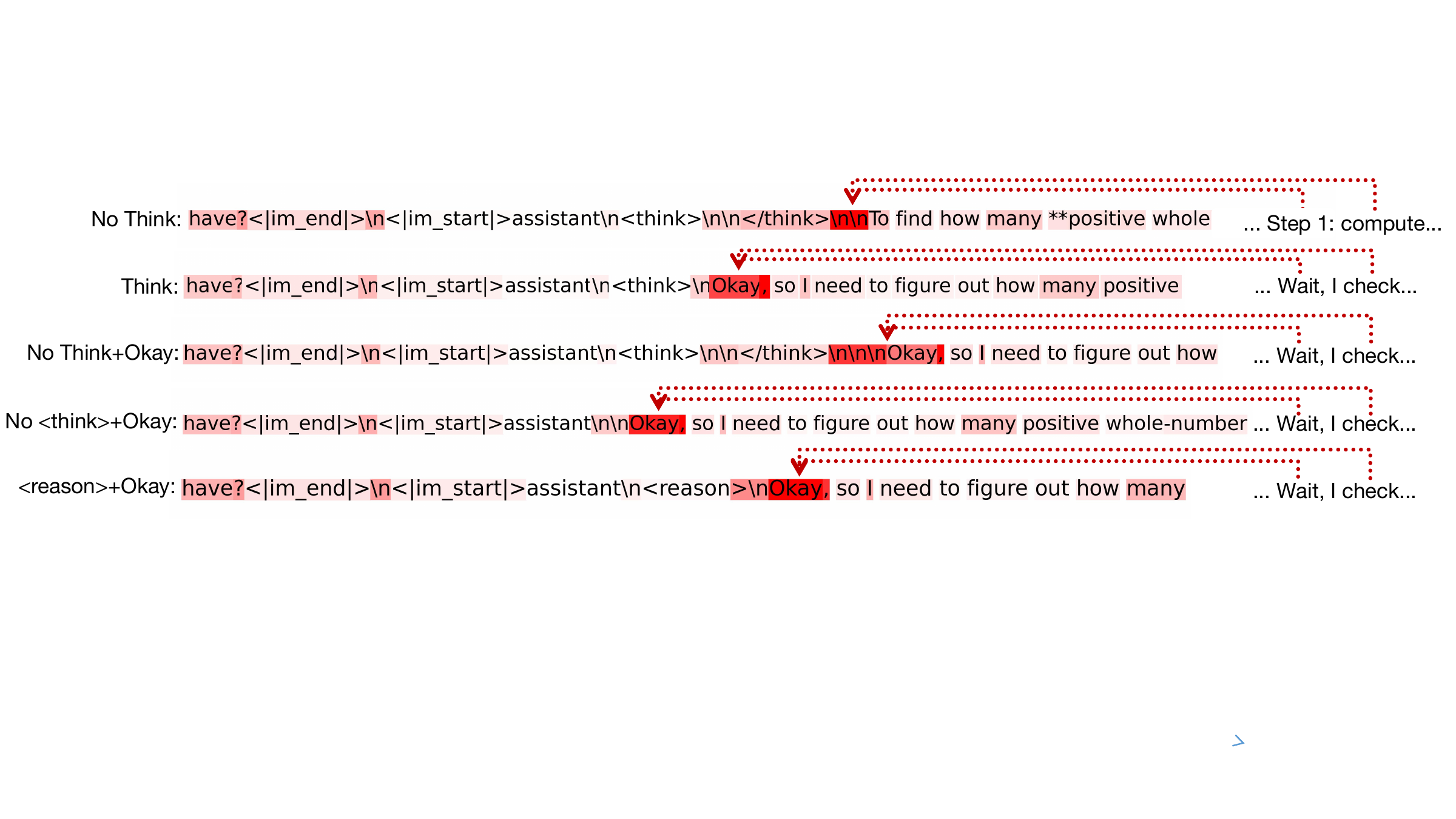
Mid-Think combines both cues in one format. The suppressing pattern first closes an empty thinking block; a new reasoning block then begins with the activating cue. This small prompt-level intervention produces an intermediate reasoning budget dynamically, rather than forcing every problem into the same preselected token limit.
Accuracy, Efficiency, and RL Training
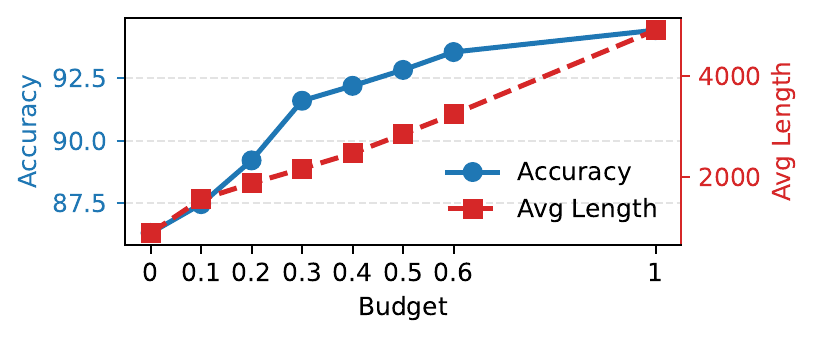
On MATH500, Mid-Think reaches 92.1% accuracy with 2,589 average tokens, compared with 86.3% and 899 tokens for no-think, and 94.4% and 4,904 tokens for full think. Across MATH500, AIME, and GPQA, it consistently improves the accuracy–length trade-off over fixed-token and instruction-based budget controls.
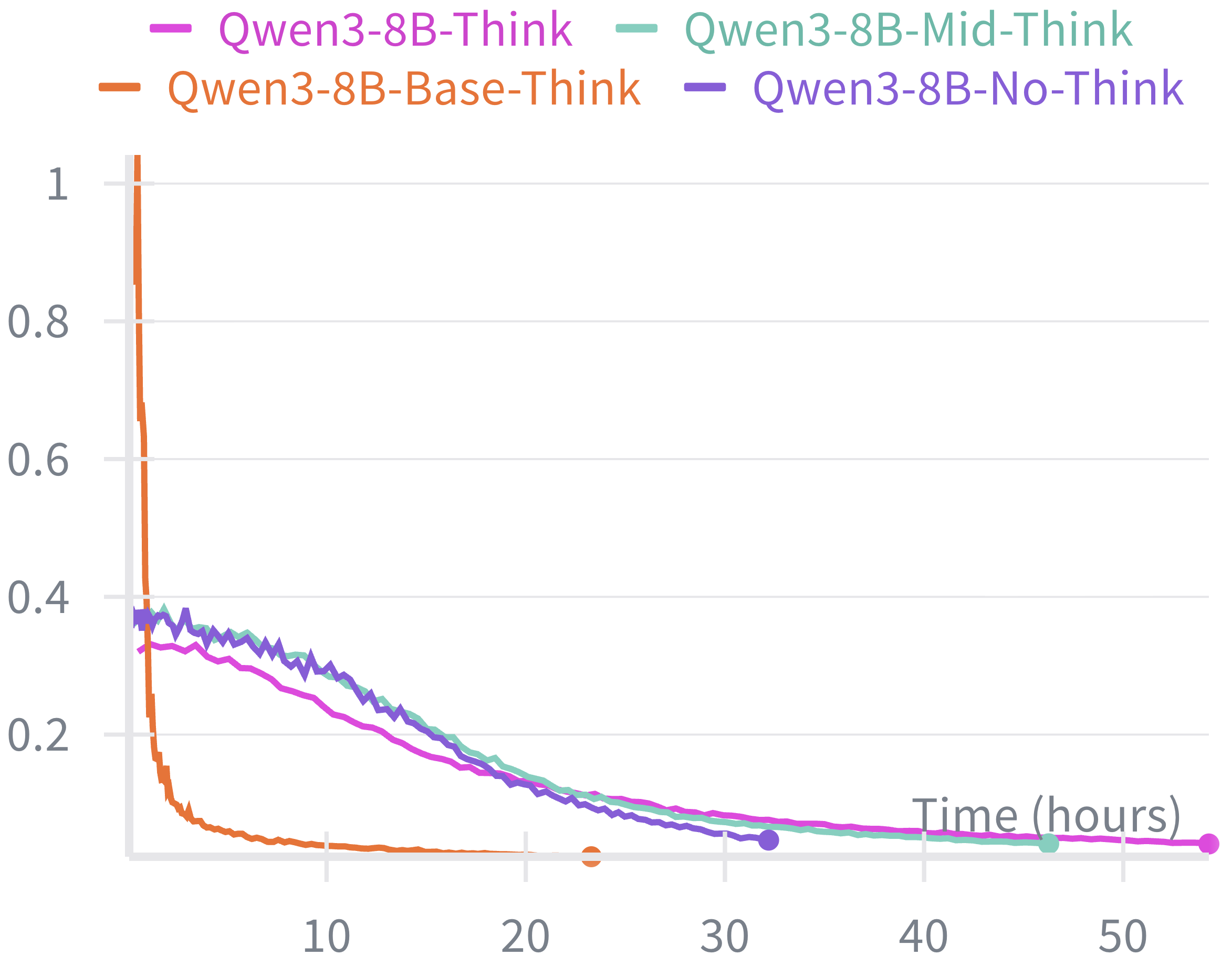
The same mechanism also helps reinforcement-learning post-training. Applying Mid-Think after supervised fine-tuning reduces RL training time by about 15% (54 to 46 hours for Qwen3-8B), while improving final think-mode accuracy from 69.8% to 72.4% on AIME and from 58.5% to 61.1% on GPQA.
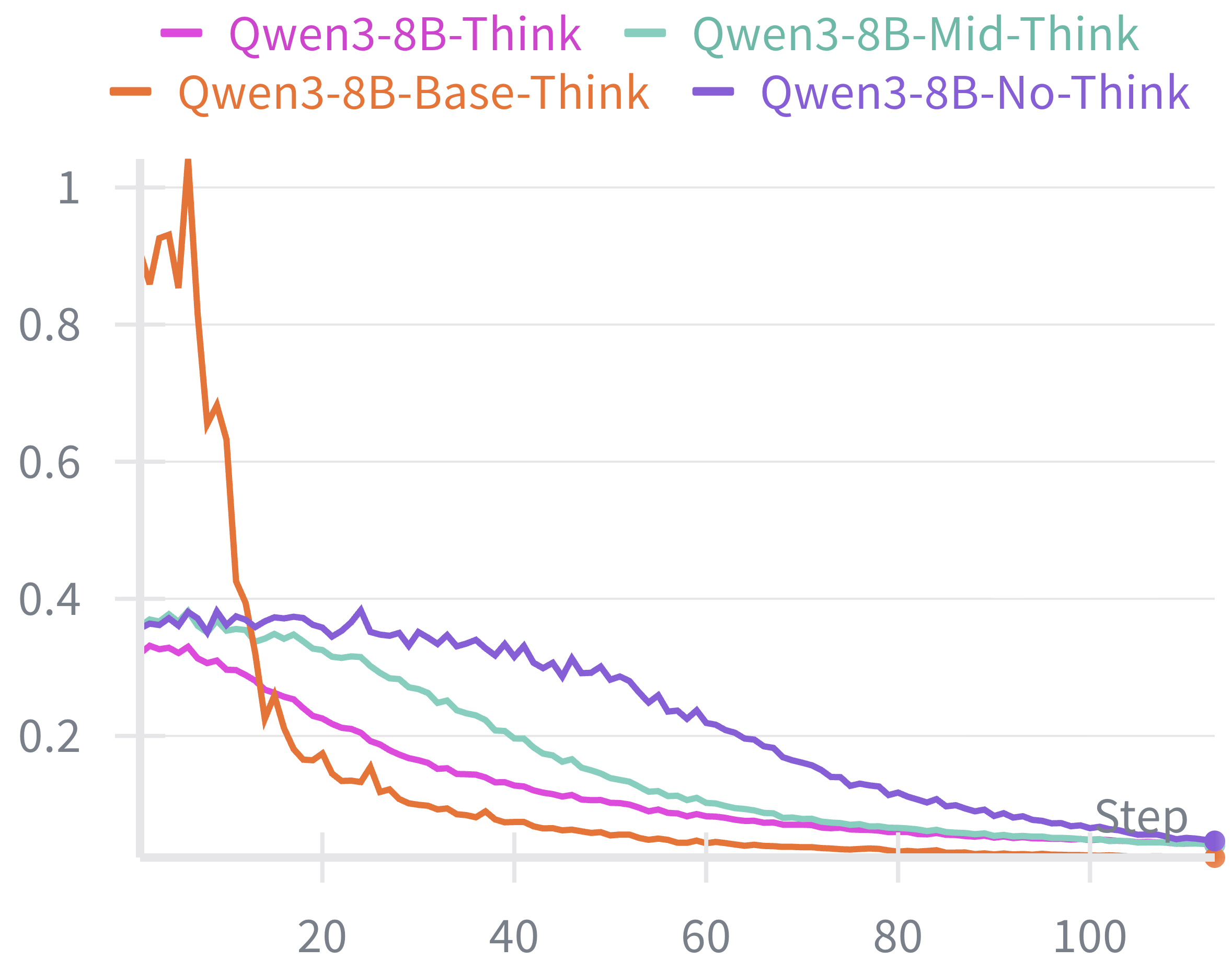
The result is a lightweight way to regulate reasoning at both inference and training time. The paper was published in Findings of ACL 2026.