Efficient Protein Language Models
A taxonomy and practical survey of data, architecture, training, and inference efficiency in protein language models.
Why Efficiency Matters in Protein Modeling
Protein language models (pLMs) have become central to variant-effect prediction, functional annotation, structure prediction, sequence generation, and protein engineering. Their rapid growth—from millions to tens of billions of parameters—also creates steep costs in GPU memory, training time, inference latency, and energy. Those costs limit who can build and deploy pLMs, and they become especially important when a model is called repeatedly inside large-scale search or autonomous protein-design loops.
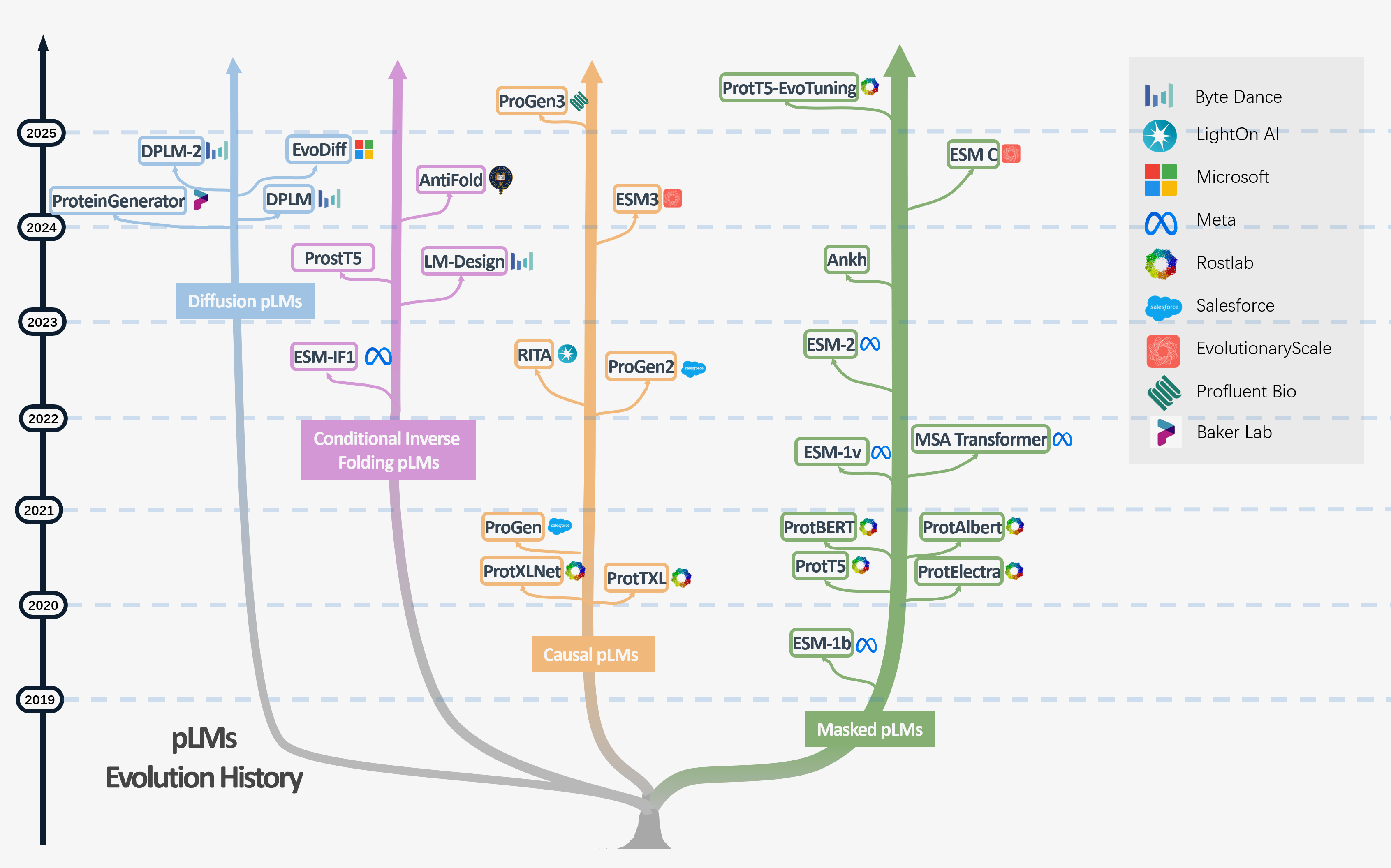
Our TMLR paper, A Survey on Efficient Protein Language Models, is a comprehensive review centered specifically on efficiency. It follows the development of pLMs from early sequence representation models to modern masked, causal, inverse-folding, diffusion, and multimodal families, then asks how efficiency can be improved across the entire model lifecycle.
Two Core Modeling Paradigms
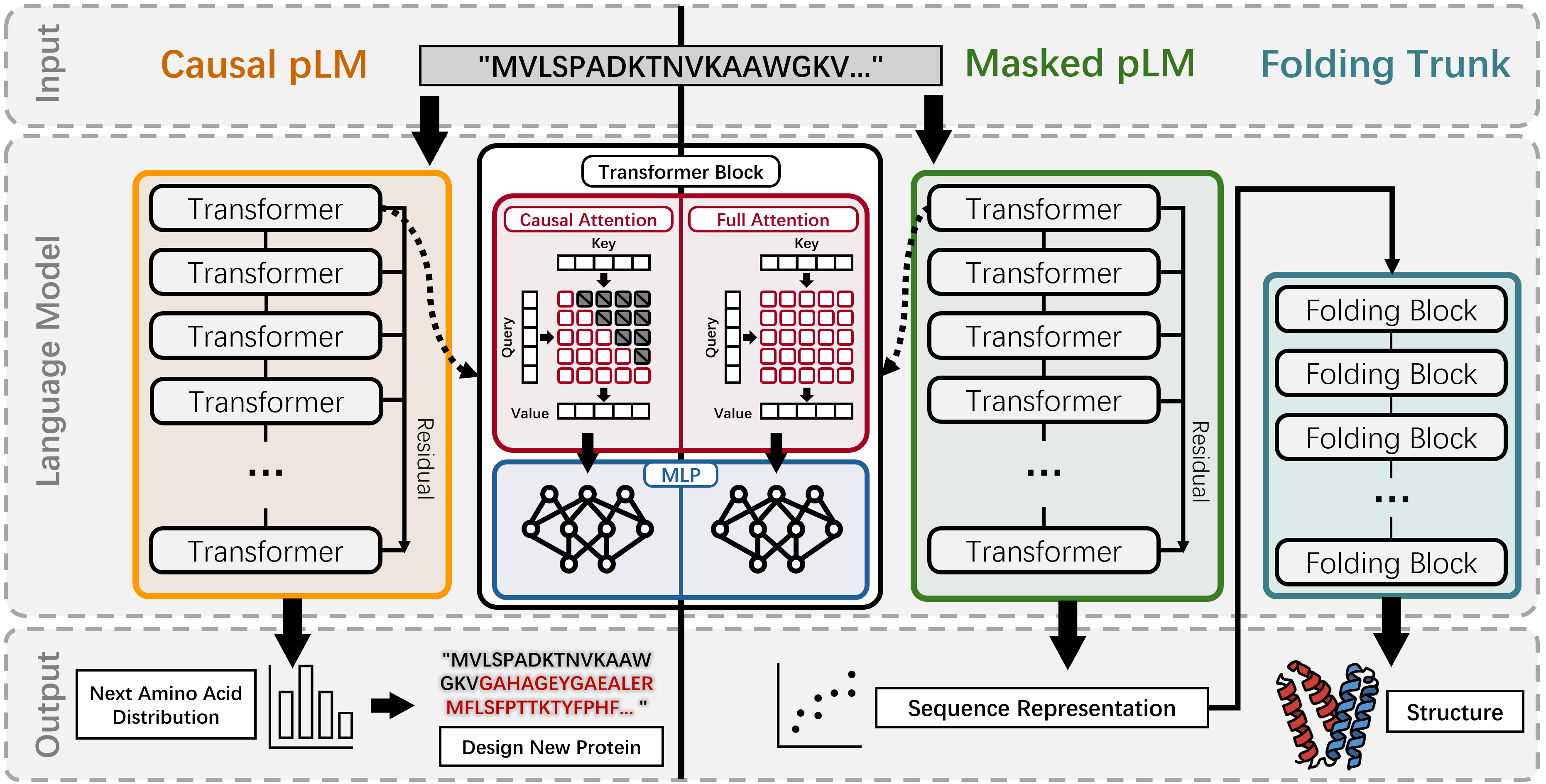
Many pLMs begin with one of two Transformer objectives. Causal pLMs predict the next amino acid autoregressively, which naturally supports de novo sequence generation. Masked pLMs use bidirectional context to recover hidden amino acids and learn representations for downstream tasks such as structure and function prediction. Understanding this distinction helps explain why the same efficiency technique may have different trade-offs across model families.
A Four-Pillar Taxonomy
The survey organizes efficiency methods into four connected pillars: dataset, architecture, training, and inference. This lifecycle view avoids treating efficiency as model compression alone; the largest savings may instead come from choosing better data, allocating compute more carefully, tuning fewer parameters, or changing how representations are searched at deployment time.
Dataset Efficiency
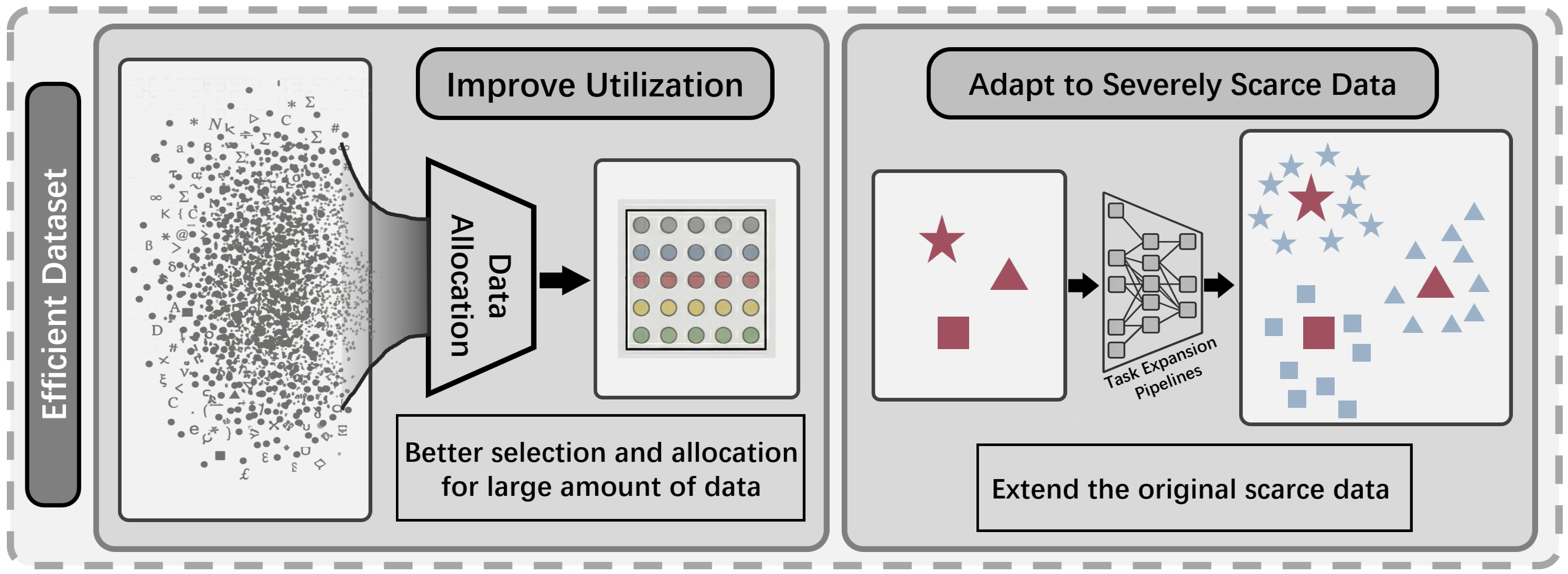
Protein data presents two opposite challenges: enormous unlabeled sequence collections and scarce, expensive experimental labels. Dataset-efficient methods therefore improve the selection and allocation of large corpora while also extending limited supervision through few-shot learning, task construction, and auxiliary biological signals.
Architecture Efficiency
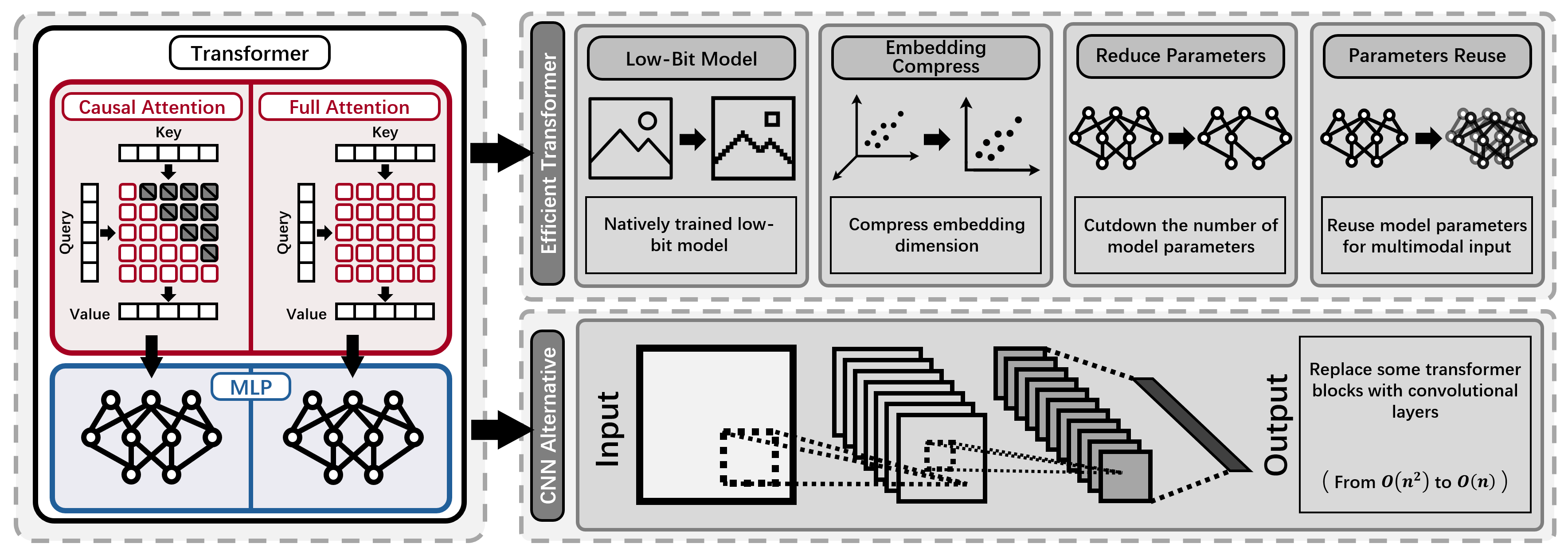
Architecture-level methods reduce the cost of the model itself. The survey covers low-bit Transformers, compressed embeddings, parameter reduction and reuse, as well as convolutional and long-sequence alternatives that can replace quadratic attention with more scalable computation.
Training Efficiency
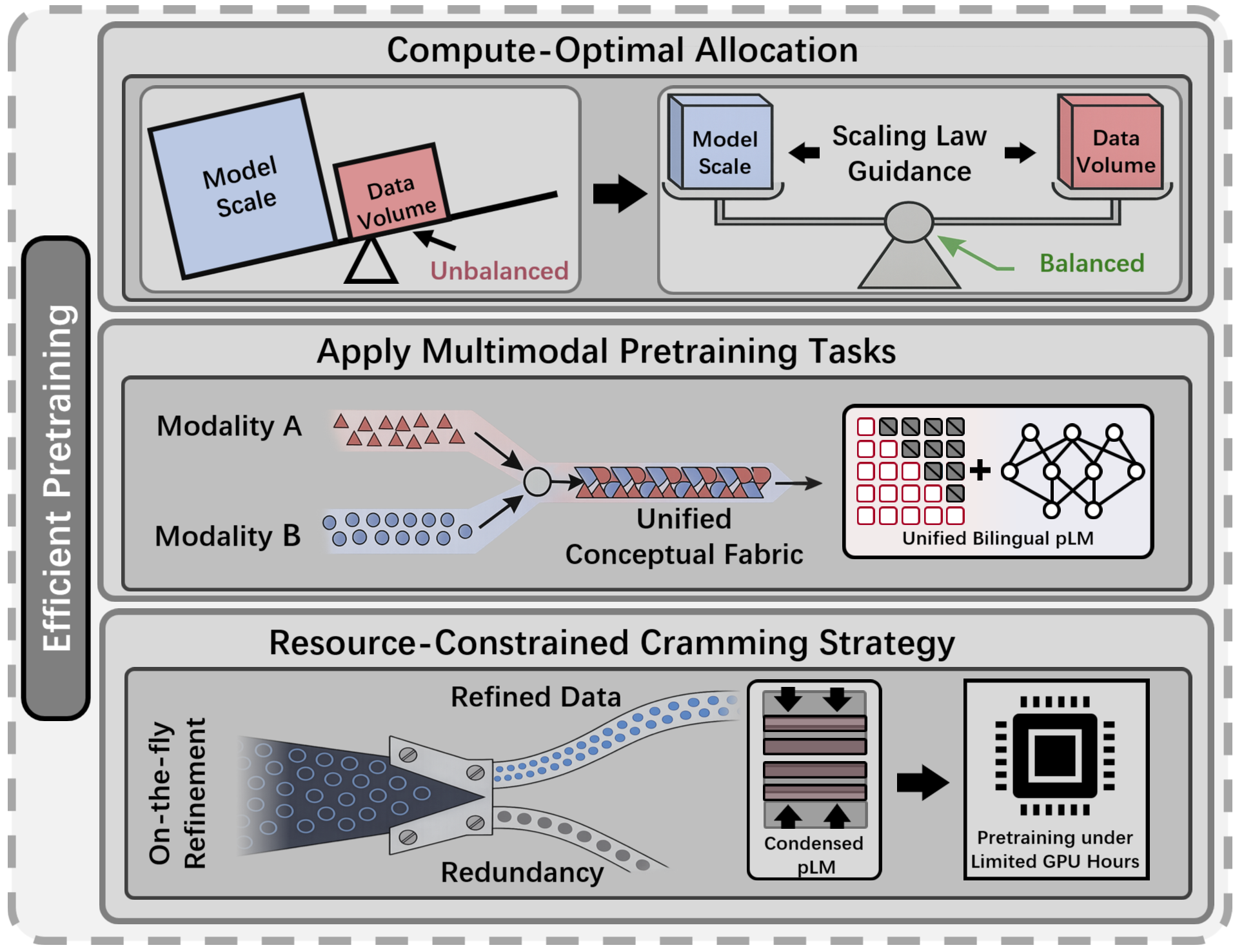
Training efficiency begins before optimization: scaling laws can guide how parameters, data, and compute should grow together. During pretraining, multimodal objectives and carefully designed schedules extract more biological information per update; “cramming” studies show how capable models can be trained under strict hardware and time budgets.
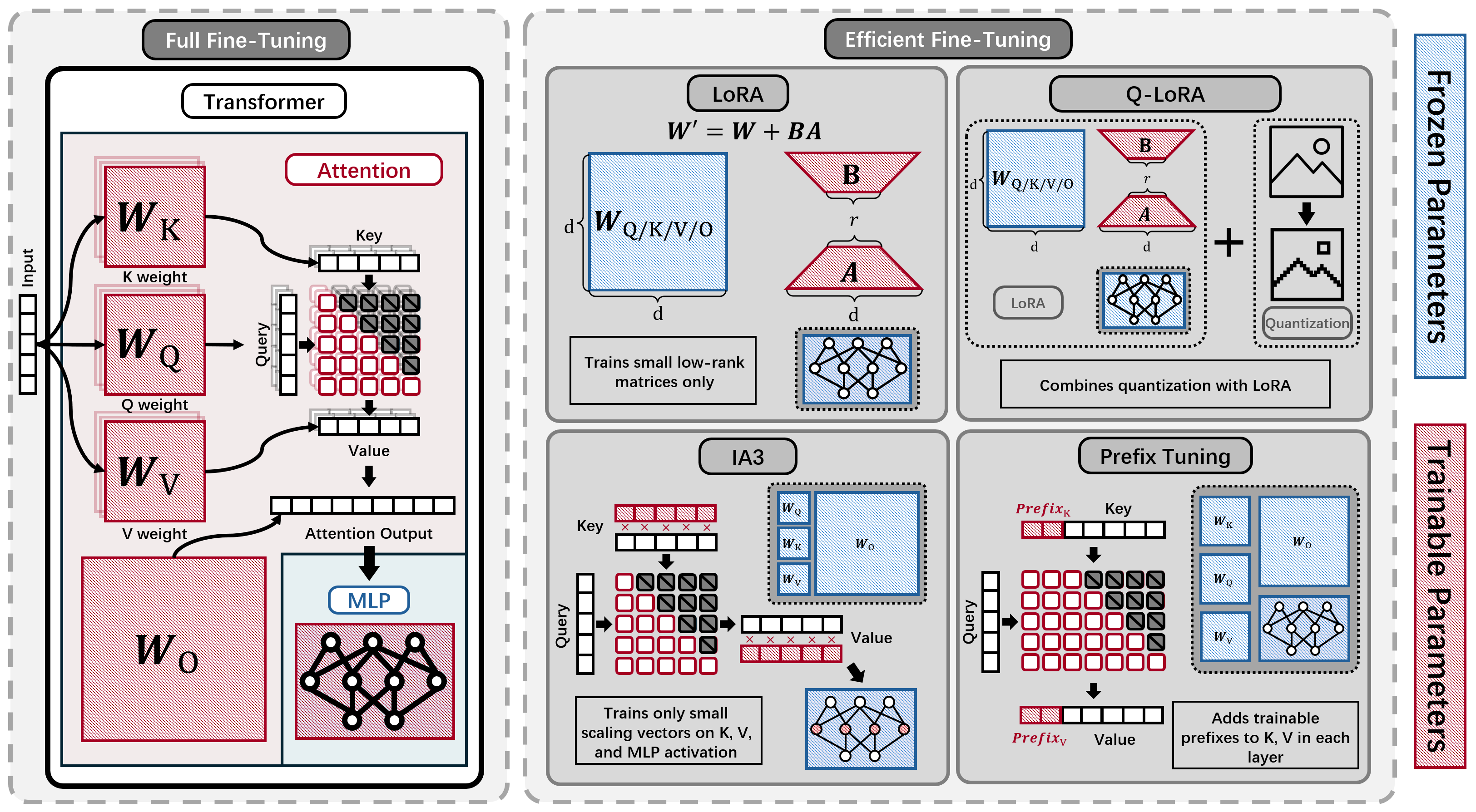
For downstream adaptation, parameter-efficient fine-tuning updates only a small fraction of the model. Methods such as LoRA, QLoRA, IA3, and prefix tuning reduce trainable memory and storage compared with full fine-tuning, making one pretrained pLM reusable across many biological tasks.
Inference Efficiency
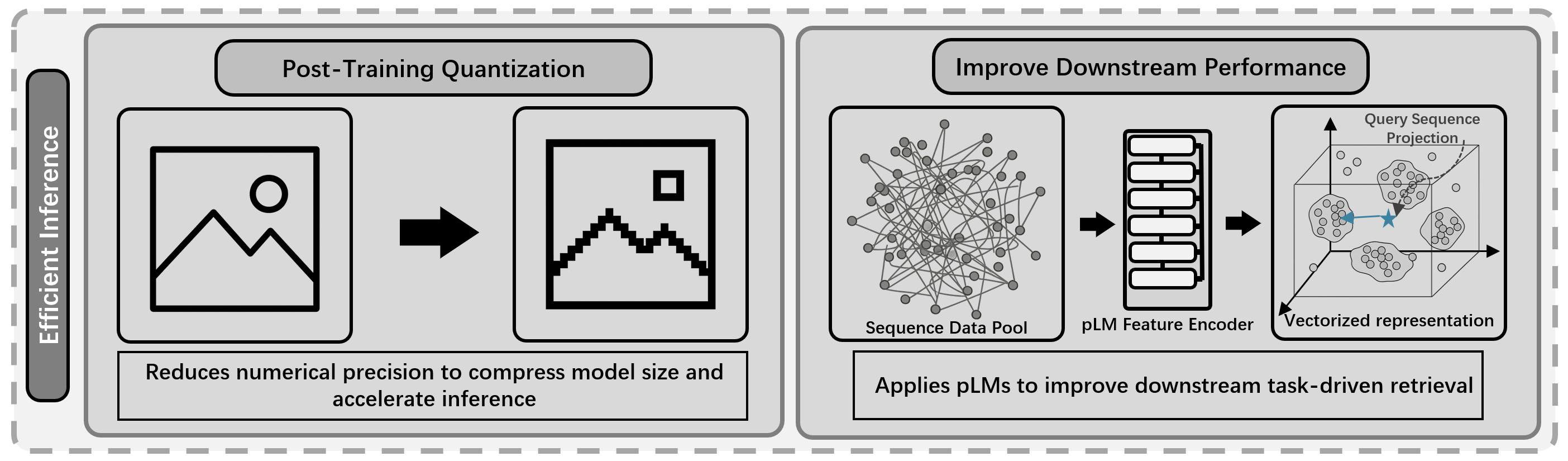
Deployment introduces a different cost profile. Post-training quantization reduces memory and arithmetic precision, while embedding-based retrieval replaces expensive alignment procedures with fast vector search. These methods can turn pLM representations into practical tools for proteome-scale homology and structure search.
Outlook
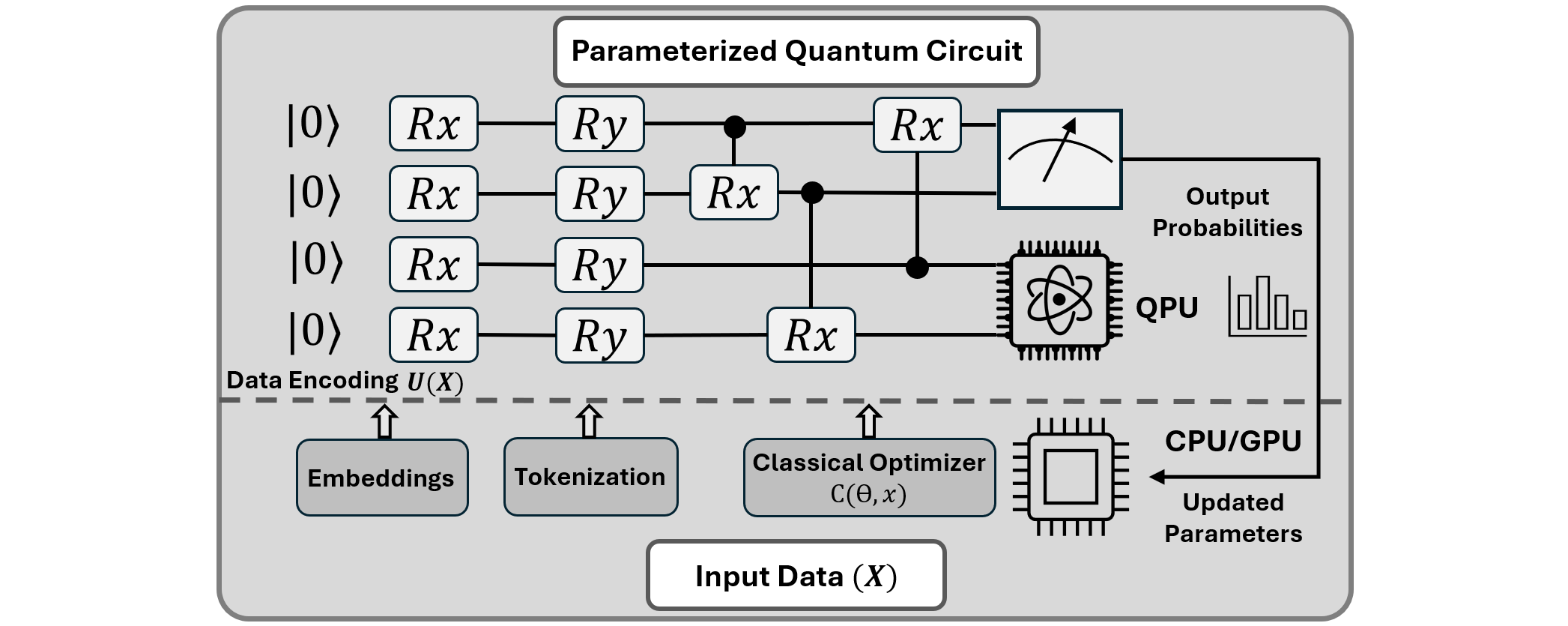
Beyond cataloging methods, the survey connects the four efficiency dimensions, highlights evaluation and comparability gaps, and offers practical guidance for choosing strategies under real resource constraints. It also identifies emerging directions including sparse mixture-of-experts models, diffusion, speculative decoding, agentic protein-design loops, and longer-term hybrid quantum–classical workflows.
The accompanying repository provides the paper, all figures, versioned releases, and a maintained reading list.